Lucia King
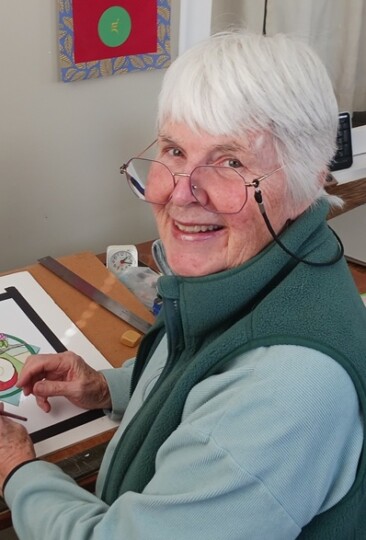
Mid-career I shifted from being a policy analyst for science and technology issues at a small research arm of the U.S. Congress, to go back to school to study studio art. I completed 60 credit hours. Following school, while continuing to consult with various federal agencies to earn a living, I apprenticed at Hinckley Pottery studio in Washington, DC, where I learned to throw functional stoneware pots. In 1993 my husband and I moved to the Shenandoah Valley where I set up a potter’s wheel and began making and selling pots at a local gallery. I also commuted to DC for various consulting jobs with the Environmental Protection Agency, the Federal Emergency Management Agency and the Nuclear Regulatory Commission. I made pots from 1988 to 2010 serving on the Tye River Pottery woodfire crew for 10 years, before shifting to writing, drawing and painting. To me art is a primal process, and at its best, a healing process. Over the course of my life, I have engaged in making art as a personal therapeutic tool and as a spiritual endeavor.
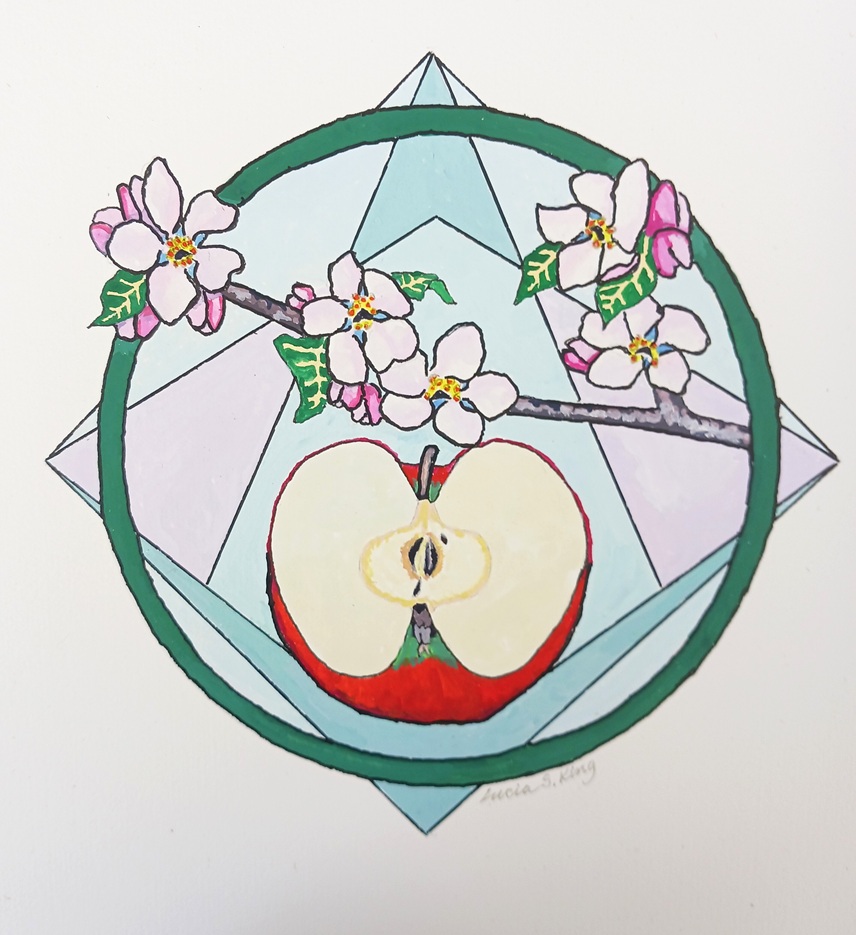
Fast forward to 2024 when I was diagnosed with Parkinson’s. After getting over the shock, I realized that I needed to be proactive in my approach to Parkinson’s. I researched exercises for Parkinson’s online and found the Power for Parkinson’s organization which offers free Youtube exercise videos which I began to do “religiously.” Through these exercises at Power for Parkinson’s, I learned a bit about neural plasticity, and doing exercises that “cross my midline” which engages more of my brain. At the time I was also working with a Virginia Beach artist, Donna Drozda, who asked me to write a contract with my higher self-using my dominant hand, and then to write an additional contract using my non-dominant hand. These two separate experiences inspired me. Would using my non-dominant hand increase my neural plasticity, I wondered. So I decided to train myself to draw and paint with my non-dominant hand, which happens to be my left hand. In the early stages of this process, I realized that I needed to let go of all judgment about my work, e.g. I wanted to return to the wonder of a five-year-old, playing with crayons. It took three months of daily practice to train my hand eye brain connection.
I don’t know whether I have increased my neural plasticity using my non-dominant hand, but I do know that I find the experience very calming. It helps me to pause, slow down, appreciate, and to focus on the present moment. It feels very healing.